Sunday, October 25, 2015

The new Whitney Museum

That's the new Whitney Museum of American Art at the top right, at 99 Gansevoort Street, with the marvelous  High Line park in front.
Renzo Piano's building isn't very exciting from the outside but it's big and spacious inside. This is the entrance lobby and bookstore.
The ritzy restaurant, EAT, has a branch attached to the ground floor entrance.
After visiting the Archibald Motley show on the 8th floor, we visited the Whitney's permanent collection on the 7th and 6th floors. We saw lots of art from their collection that was new to us.
We particularly liked Lee Krasner's The Seasons, 1957. Oil and house paint on canvas
Morris Louis' stained canvas Addition II, 1959. Acrylic.
This is Helen Frankenthaler's Blue Form in a Scene, 1961. Oil on canvas.
We thought Willem de Kooning's Door to the River, 1960, looked particularly fresh. Oil on linen.
John loved Marisol's delightful sculpture, Women and dog, 1963-64. Wood, plaster, acrylic, taxidermic dog head and found objects.
The exterior viewing platforms on the 8th to 6th floors offer fabulous views of Manhattan and the Hudson River.
Particularly delightful since the weather in New York has been in the mid-20s this week.
That's the Empire State Building in the middle distance.
We love Charles Demuth's naughty watercolour and graphite drawing, Distinguished Air, 1930
and Reginald Marsh's Ten Cents a Dance, tempera on composition board.
I'm a big fan of John Marin's watercolours. This is Region of Brooklyn Bridge Fantasy, 1932.
 Edward Hopper's Study for Nighthawks, 1941 or 1942 in charcoal. Lovely!
Let's end back on the ground floor where the Whitney continues to offer a site-specific artwork in a side room as they did in the old Madison Avenue venue. This is Jared Madere's humorous Untitled, 2015 in mixed media, including scarves, fans, twine, lace, Italian marble, glass, water and LEDs. Afterward we took a refreshing walk along the High Line Park.

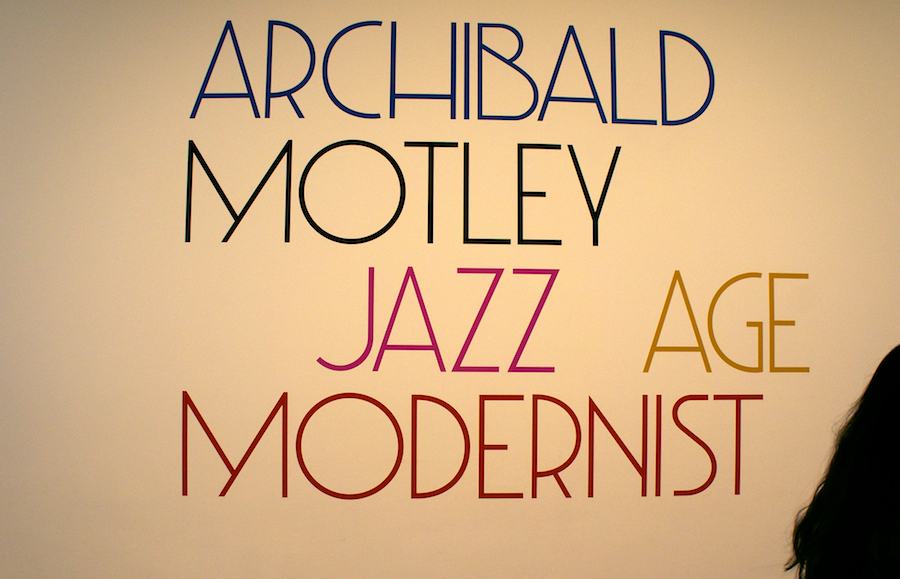
Archibald Motley at the Whitney

John and I were introduced to the 1920's painter, Archibald Motley, when we visited the new Whitney Museum for the first time last week.
 Motley's work is primarily expressionistic, but his lovely portraits, like this Nude (Portrait of My Wife), 1930, are realistic.
 Blues, 1929, painted while he was in Paris in the 20s on a Guggenheim grant is more typical of his style.
 Most of the pieces recorded the Black experience in his hometown of Chicago. The easy integration of races in the school yard in Playground (Recess), c.1940, was probably wishful thinking about American society at the time.
 Tongues (Holy Rollers), 1929, and Barbecue, 1931, are more likely to represent the real experience of the Chicago population of the early 20th century. It was fun to witness this revival of Motley's career.

Saturday, October 24, 2015

Gerhard Steidl at Strand Bookstore

Last Thursday, Gerhard Steidl, the best art and photo book publisher in the world, gave a lecture on the future of the printed book at the Strand Bookstore in New York City.
 He told us that when he was a student of Joseph Beuys he apologized for asking so many stupid questions. Beuys told him, "Every revolution begins with stupid questions." Nice!
 Steidl reminded us that the webspace for free online books is always rented and that rent must be paid every single day.
He told us there is a German proverb: Print is patient -- a printed book just needs a shelf.
Afterward the modest Gerhard Steidl talked to members of the crowd.

Friday, October 23, 2015

New Video by Rineke Dijkstra

At the Marian Goodman Gallery on West 57th Street John and I watched a new video installation,  The Gymschool, St. Petersburg, Russia, 2014 by a favourite artist, Rineke Dijkstra.
In her new piece, Dijkstra, presented pre-adolescent girls practicing their difficult routines.
Find shyness, frustration, pride and determination fully on display.
Dijkstra has a special gift for recording youth.

Thursday, October 22, 2015

Picasso Sculpture at MOMA

John and I arrived in New York City on Monday and began our art tours with a visit to the Museum of Modern Art where we loved the huge exhibition of Pablo Picasso's sculptures. The works, from the 1910s to the 1960s, were full of invention and often playful. Here's a selection.
 Still Life with Guitar,  Paris, 1913, paperboard.
Violin, Paris, c 1915. Painted sheet metal and iron wire.
 Head of a Woman, Paris, 1929-30. Painted sheet metal, springs and metal colanders.
 Bust of a Woman, Boisleloup, 1931. Plaster.
 Head of a Woman, Boisgeloup,1932. Plaster.
 Bather, Boisgeloup, 1931. Bronze.
 Drawing from the series An Anatomy, c1933. Graphite.
 Head of a Warrior, Boisleloup, c1933. Plaster, wood, metal.
Woman with Leaves, Boisgeloup, c1934. Plaster.
 Head of a Woman, Paris, 1941. Plaster.
 Death's Head, Paris, 1943. Torn and scratched paper
 Flowery Watering Can, Paris, 1951-52. Plaster with watering can, metal parts, nails and wood.
 Pregnant Woman, Vallauris, 1950. Plaster, wood, ceramic vessel.
 Woman carrying a child, Vallauris,1953. Painted wood and section of a palm leaf.
 Goat Skull and Bottle, Vallauris, 1951. Painted bronze.
 Woman with a Baby Carriage, Vallauris, 1950-54. Bronze.
 Little Girl Jumping Rope, Vallauris, 1950-54. Bronze.
 Sylvette, Vallauris, 1954. Sheet metal.
 She-Goat, Vallauris, 1950. Bronze.
 Bull, Cannes, 1958. Wood, branches, nails.
 Head of a Woman, Cannes, 1961. Painted sheet metal.
Little Horse, Vallauris, 1961. Painted sheet metal. 
And we'll end with Woman with Outstretched Arms, Cannes, 1961. Painted sheet metal. If you are in New York this Fall be sure to catch this show!